
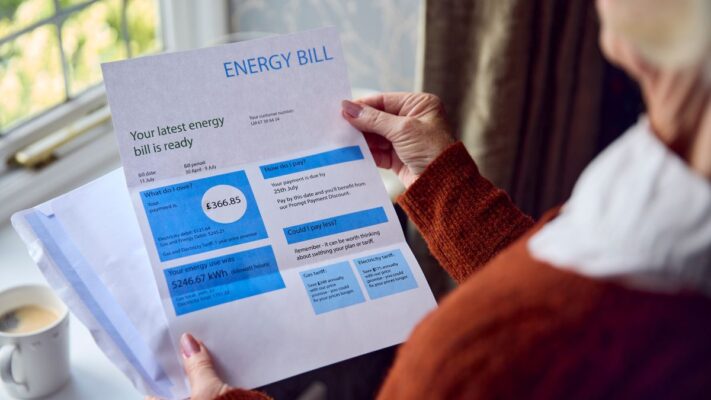
Energy Bills’ Standing Charges: What You’re Paying For
Energy and gas bills can be unpredictable sometimes. Besides the per-unit price that you pay for energy consumption, standing charges need to be paid too.
Due to insufficient understanding of what they are, you avoid paying them off. That may cause you trouble later, maybe in the form of penalties. It is better to know about standing charges and learn how they work.
What is a standing charge?
A standing charge is a fixed-amount charge that is added on a daily basis to the energy and gas bills. The same amount is added by the service provider on a daily basis irrespective of the units consumed.
Whether you consume less or more energy, these bills remain the same. Not paying them off can increase your cost, and penalties can be applied.
Disconnection of energy services is also the last option service providers use. People who are unaware of these facts sometimes have to pay a higher cost later. Many Irish households even get loans on weekly instalments to pay the pending standard charges.
Why are standing charges added to the bill?
Standing charges are charged to cover certain expenses that are necessary to maintain energy services. These are –
· Maintenance of electricity and gas networks.
· Customer service operations
· Infrastructure upgrades
· Meter installation and maintenance
· Transmission and distribution costs
Why do standing charges increase?
With time, standing charge expenses may increase due to the reasons below.
Supplier failures
In case energy supplier companies fail, they transfer consumer accounts to a new provider. This includes a considerable cost. Hence, money taken as standing charges is used for this purpose.
High infrastructure costs
Service providers need to maintain the infrastructure and ensure uninterrupted energy delivery. That demands a constant flow of money. Standing charges fulfil that need too.
Regulatory charges
Government rules and regulations keep changing. This may change the amount that service providers need to comply with the new set of rules.
Investment in renewable energy
Transformation of energy services into renewable and cleaner energy demands a considerable financial investment. Service providers compensate a major part of such costs using the standing charges.
Is it fair to take standing charges?
It has always been a matter of discussion. People have different points of view about the significance of these charges.
| Argument in support of charges | Argument against the charges |
| Everyone receives benefits from the energy network. It is necessary to maintain the service. All should share infrastructure costs. | Consumers with low income struggle with costs. People using low energy have to pay a high cost. Customers have no control over these costs. |
How to mitigate the effect of standing charges?
Use the tips below to reduce the impact of standing charges on your energy bills.
- Know your consumption pattern – understand your monthly energy consumption and find a provider with low charges.
- Compare energy tariffs – different service providers have different charges. Compare before you choose.
- Consider smart meter monitoring – Smart meters identify details about energy consumption.
- Improve energy efficiency – If you consume less energy, it can reduce the variable cost of your energy bills.
How do standing charges affect low- and high-energy users?
The cost type affects different households in a different manner.
- Low energy users – Such users are more affected by the standing charges. Their consumption is low; therefore, they expect a low-cost bill. But no matter whether they consume less or very little, standard charges remain the same. Such users include holiday homes, single occupants, energy-efficient households, and people who stay less at home.
- High-energy users – These households pay more on the variable part, as their consumption is higher. For them, it may be a point of relief that at least a part of their bill is fixed and not volatile.
More energy consumption is seen in large families, houses with high energy demands and homes with electric heating. Also, properties with multiple occupants or tenants have a higher consumption cost.
Where can I check energy’s standing charges?
Standing charges are usually mentioned on –
- Annual statements
- Monthly energy bills
- Tariff information sheets
- Supplier websites
- Energy comparison websites
Standing charges differ by region – why?
Yes, this cost is different in every region due to the following factors.
- Population density
- Local network and operating costs
- Distribution expenses
- Infrastructural differences
- Regulatory arrangements
Can you avoid paying standing charges?
Not really, as in most of the regions, standing charges are applicable. A few exceptions are available, though; usually it is not possible.
Some service providers do offer no-standing-charge services. But in that case, they charge a higher price per unit. That can be more expensive for you.
Such options are only useful for holiday homes, very low-energy-consumption households or empty homes. Therefore, in most of the cases, you cannot avoid paying the charge.
Never keep it pending. If you avoided paying it previously, pay it now. You can consider taking instalment loans from a direct lender to keep your budget unaffected by the high pending cost.
The final thought….
You should now be able to understand what standing charges are and how they work. From now onwards, be careful about them and choose your service provider wisely.
You should remain informed and understand how the energy and cost bills work. These are among the biggest expenses in every household. Hence, use ways to reduce the standing charges. But also understand their significance.
FAQs
Is it possible to switch energy suppliers to pay a lower standing charge?
Yes, it is absolutely possible to switch energy suppliers. Compare tariffs and choose the one with the lowest charges.
Do standing charges affect prepayment meter customers?
Yes, the cost does affect customers with prepayment meters. The charges are deducted from the credit due on the meter.
Can landlords choose the standing charge for a rental property?
No, landlords do not have any such authority. The service-providing companies always decide it.

Paul Smith is an established financial author and writer with over nine years of experience, who specialises in personal finance, loans, credit management, and investment strategies for people throughout the UK. Paul’s expertise can be seen on leading loan websites such as Bargainloans. Through his blogs and articles Paul has helped thousands of borrowers make wiser financial decisions while his passion for study encourages people to take control of their finances with greater confidence and clarity


