

How to get an approved loan for debt consolidation?
You know how stressful it feels when debt payments pile up everywhere. Consolidating everything into one loan makes life much simpler. Your credit score matters here, but it’s not the only factor lenders consider.
Most people worry their credit isn’t good enough for approval these days. The truth is that many lenders now work with a wide range of credit situations. You need to demonstrate that you can reliably handle the monthly payment.
Finding Lenders Who Actually Want to Help You
Some lenders specialise in debt consolidation and are better equipped to understand your situation. They’re not trying to trick you with complicated terms or fees. You want someone who explains everything clearly from the start.
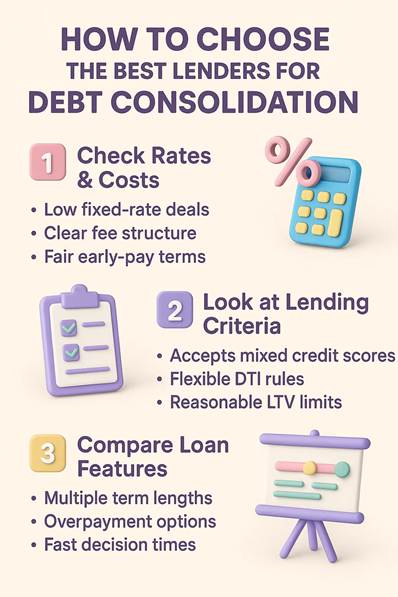
The best lenders for debt consolidation often have more flexible approval requirements. They consider your entire financial picture, not just your credit scores. These companies actually want to help you get back on track.
Cut Small Debts First
You can tackle these easier wins first to improve your overall debt picture. Clearing small balances demonstrates to lenders that you’re serious about taking control of your finances.
Most people overlook how much these tiny amounts hurt their credit usage percentage. Your credit cards look much better when you’re not using every penny available. Lenders notice when you’ve made the effort to clean up smaller obligations first.
- Clear tiny UK card sums to reduce your total debt load
- Lower total use percentage across all your credit accounts
- Show good intent through consistent small debt payments
- Free up monthly cash flow for your consolidation loan payment
Show Steady UK Income
Your income proof needs to paint a clear picture for lenders right now. They want to see you’re earning consistently month after month without big gaps. Recent payslips are most effective, but self-employed individuals require different documentation to prove their earnings.
Bank statements should match exactly what you claim you’re making each month. Lenders carefully scrutinise this and identify discrepancies between claimed income and actual deposits. Side income counts too, but you need proper records to support it.
- Stable hours show you’re not on zero-hour contracts
- Side income proof helps boost your total earning capacity
- Bank inflow that matches your claimed monthly income exactly
- Three months of minimum consistent earning patterns required
- Contract details if you’re freelance or work through agencies
Opt for a Debt Consolidation Mortgage
Property owners have access to some of the cheapest borrowing rates available today. Your house equity can unlock significantly lower interest rates than personal loans offer. This route works especially well when you have substantial debts to consolidate.
Debt consolidation mortgage options let you spread payments over much longer periods. You’re transferring expensive credit card debt to your much lower mortgage rate. This approach can significantly reduce your monthly payments while clearing all other debts completely.
Current Rates For Consolidation Loans
| Factor | Typical Range | Notes |
| Interest Rate (Fixed) | 5.2% – 7.9% | Depends on credit score & LTV |
| Interest Rate (Variable) | 4.8% – 7.4% | Can rise with market changes |
| Loan-to-Value (LTV) | Up to 80–90% | Higher LTV may increase rates |
| Term Length Options | 15–35 years | Longer terms lower monthly cost |
| Fees & Charges | £995 – £1,995 | Product fees vary by lender |
| Early Repayment Charges | 1–5% | Applies for fixed-rate deals |
- Use your home equity to access lower interest rates
- Keep your home while getting debt relief through refinancing
- Work with mortgage brokers who specialise in debt consolidation cases
Clean Up Your Bank Data
Your bank statements tell a story about how you manage your money on a daily basis. Lenders scan these carefully, looking for signs of financial stress or poor habits. Unpaid direct debits and overdraft fees raise red flags about your reliability.
UK banks typically request three to six months of recent statements now. They’re reviewing your spending patterns and looking for signs of gambling or excessive cash withdrawals. Maintaining tidy banking habits in the months leading up to your application can significantly enhance your case.
- No unpaid direct debits are showing on your recent bank statements
- Fewer cash withdrawals that lenders can’t trace or verify
- UK banks scan three to six months of detailed transaction history
- Minimal overdraft use shows you live within your actual income
Pick the Right UK Lender Type
Different lender types have completely different approval criteria and processes these days. High street banks adhere to stricter rules, while credit unions often assist their members, but others may not. Online lenders move faster but might charge more for that convenience.
Soft search tools let you check your chances without damaging your credit score. You can see which lenders might approve you before making formal applications. This saves time and protects your credit from multiple hard searches.
- Soft search tools show approval odds without affecting your credit score
- Credit unions often help members with less-than-perfect credit histories
- Online lenders offer speed but may charge higher rates overall
- Mortgage brokers can access lender deals not available to direct applicants
Keep Your Ask Realistic
Lenders have strict rules about how much they’ll lend against your income. Most won’t go above four or five times your annual salary these days. Your monthly payments should not exceed about half of your income.
Some popular loans, like 1000-pound loans with terms that stretch too long, actually work against you in many cases. Lenders prefer shorter terms because they indicate that you’ll clear your debt faster and pay less interest. Secured loans have different rules about property values and loan-to-value limits.
| Trend | Direction | Short Phrases (with Rates) |
| Fixed-rate levels | Slight fall | 3.7%–4.2% common for mid-range LTV |
| High-LTV pricing | Stable / higher | 4.5%–5.2% for 85–90% LTV deals |
| Remortgage demand | Rising | More borrowers shifting debts into 4%-range fixes |
| Debt-to-income checks | Tightening | Higher debt loads push rates upward |
| Variable-rate appeal | Growing | Trackers often start below 4% |
| Equity-release use | Increasing | Low-LTV homeowners securing sub-4% rates |
- Loan sum fits comfortably within your proven monthly income capacity
- Term length not too long to avoid excessive total interest payments
- APR rates should fall within the current UK market norms for your situation
- LTV rules apply strictly if your loan uses property as security
Conclusion
The UK is hit by high card APRs, which means people really need better options. Credit card rates have become quite challenging for most families lately. Lenders are aware of this, and many are willing to help with consolidation loans.
Banks run stress tests to see how you’d handle tougher times. This sounds scary, but it’s actually protecting you from overcommitting financially. They verify that you can still pay in unexpected situations.

Paul Smith is an established financial author and writer with over nine years of experience, who specialises in personal finance, loans, credit management, and investment strategies for people throughout the UK. Paul’s expertise can be seen on leading loan websites such as Bargainloans. Through his blogs and articles Paul has helped thousands of borrowers make wiser financial decisions while his passion for study encourages people to take control of their finances with greater confidence and clarity


